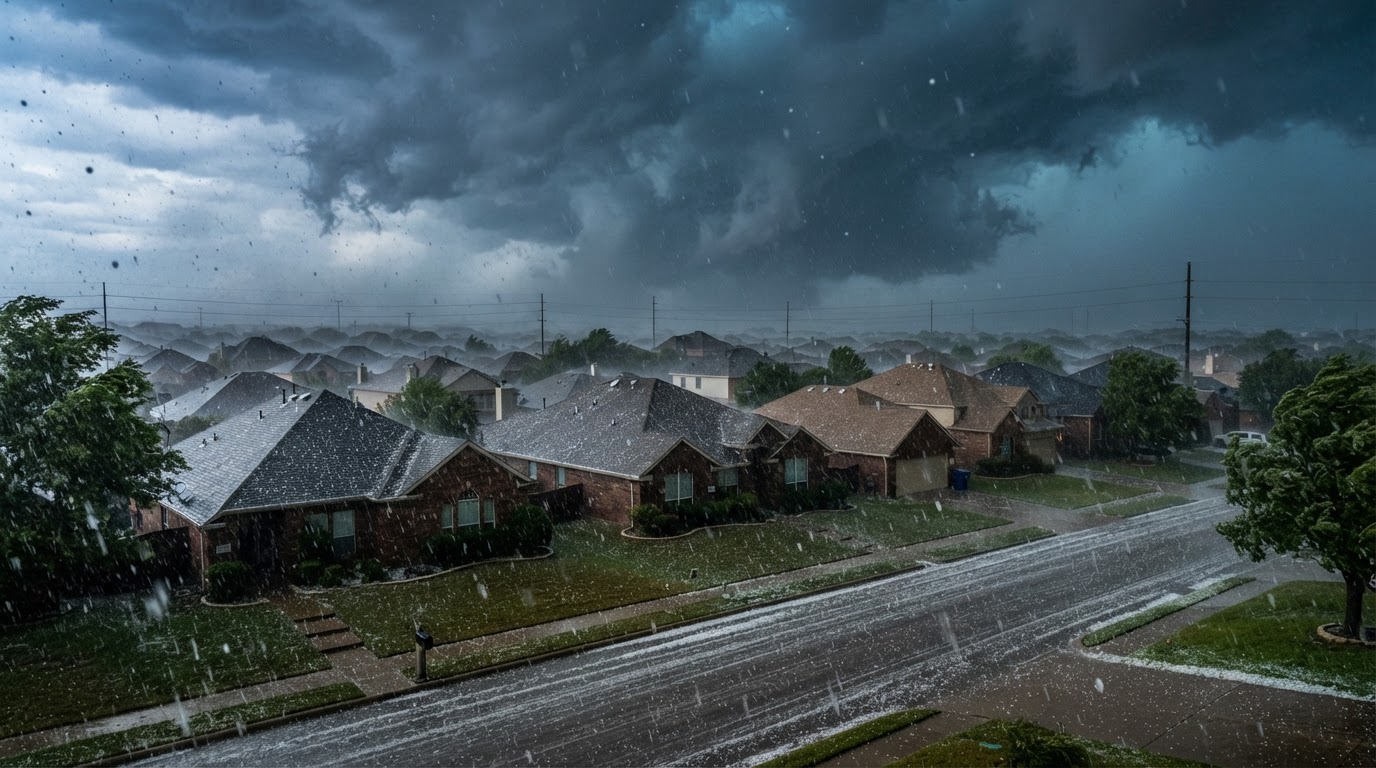
North Texas hailstorms vary in intensity, and two homes on the same street can have very different damage. Roof direction, slope, material, age, nearby trees, hail size, and wind all affect the outcome. The good news is that the right steps after a storm are the same regardless of how much damage there is. Protect people first, document what you can safely see, and get a professional inspection before making any decisions.
Stay off the roof
Do not climb onto a wet, steep, or visibly damaged roof after a storm. Most useful observations can be made from the ground and inside the home. Leave the roof access to a professional.
Step 1: Protect people and property
Before anything else, make sure everyone is safe. If water is actively entering the home, move belongings away from the water when it is safe to do so, and place a container under a drip if practical. Avoid climbing ladders on wet ground, and do not walk on a roof that may be weakened.
Step 2: Look for immediate warning signs
From the ground and inside the home, check for the following:
- Missing or broken shingles in the yard or on the ground
- Dents on metal vents, gutters, flashing, or downspouts
- Water stains or active dripping on ceilings and walls
- Debris, tree limbs, or granules piled in gutters
- A change in the roofline or visible sagging
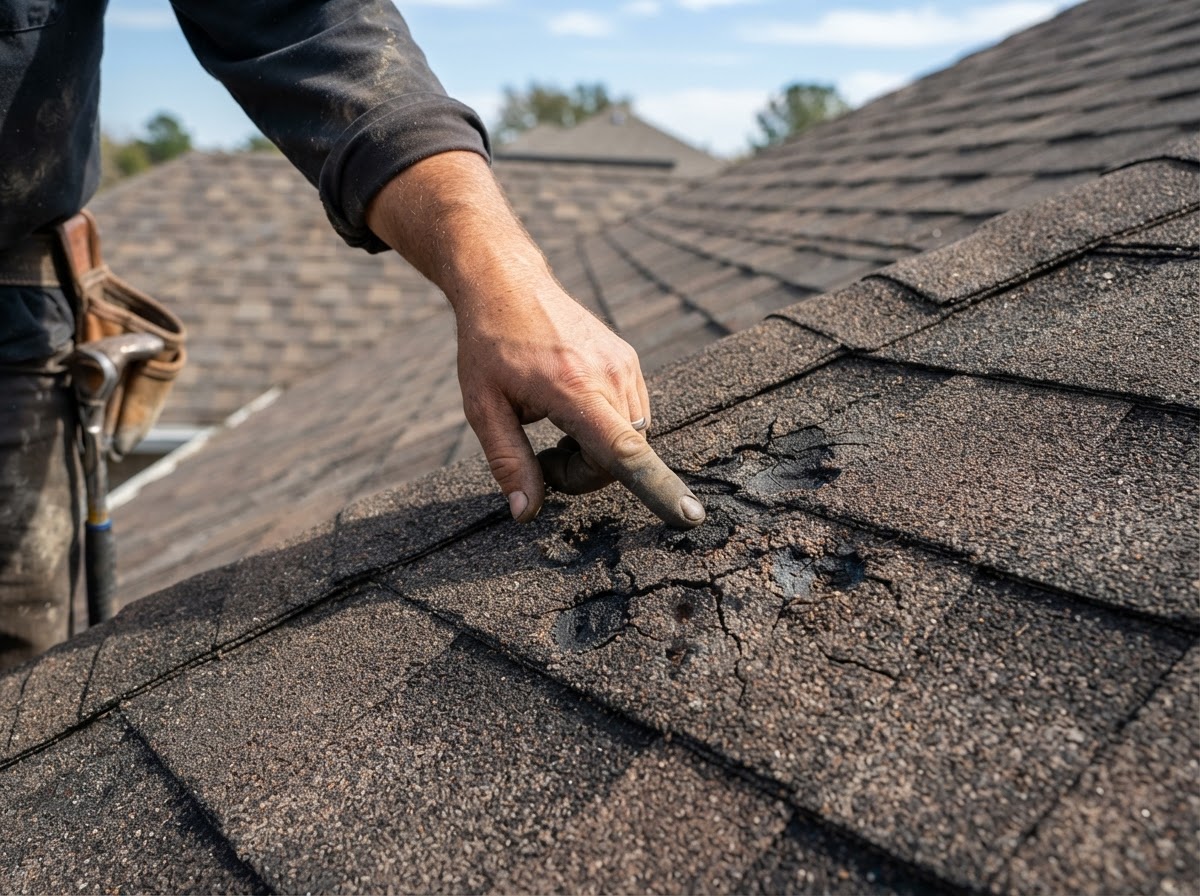
Hail can bruise or fracture shingles without knocking them off, and damage can exist without an immediate interior leak. The absence of water indoors does not mean the roof is fine.
Step 3: Document what you see
Take clear, ground-level and interior photographs. Note the date and approximate time of the storm if you know it. Save any correspondence, claim numbers, and estimates in one place. Good documentation helps both a roofing contractor and an insurance carrier understand the situation.
Step 4: Schedule a roof inspection
A professional storm damage inspection can identify damage that is hard to see from the ground and explain whether a focused repair or a broader replacement makes sense. The goal is to understand the roof, not to push the largest possible project.
Ask who will perform the inspection, who supervises the crew, and what the written scope will include. A free inspection should not obligate you to hire the contractor.
Step 5: Contact your insurance carrier
The decision to file a claim belongs to the policyholder, and the insurance carrier, not the roofing contractor, determines coverage and claim approval. If you choose to file, report the event accurately, follow the carrier's instructions, and keep copies of everything.
A roofing company can document visible conditions and explain the work that may be needed, but it cannot guarantee an outcome or negotiate policy benefits. Our roof insurance claim guidance page explains the roles in more detail.
Step 6: Watch for pressure tactics
Large storms attract aggressive sales activity. Slow down if a contractor:
- Guarantees insurance approval before an inspection
- Claims the roof will cost you nothing out of pocket
- Asks you to sign a contract before the damage is explained
- Blurs the line between roofing work and representing you on the insurance claim
Ask who owns the company, who supervises the crew, what liability coverage the contractor carries, and whether the scope is in writing. Advanced Roofing is BBB Accredited with an A+ rating and carries $1 million in liability coverage.
Repair or replacement?
A storm does not automatically mean you need a new roof. A localized problem on an otherwise serviceable roof may call for a roof repair. Widespread impacts, damage across several slopes, or a roof that was already near the end of its serviceable life may make roof replacement more practical.
Quick checklist
Protect people first. Stay off the roof. Look from the ground and inside. Check ceilings, gutters, and the yard. Document with photos and dates. Keep everything in one place. Schedule a professional inspection. Get a written scope. Contact your carrier if you choose to file. The carrier decides coverage. Do not sign under pressure. Ask who owns and supervises the work.
Advanced Roofing has inspected and documented storm damage across Fort Worth and the surrounding area since 2006. Call 817-602-7070 or request a free storm damage inspection to get the facts before you decide.