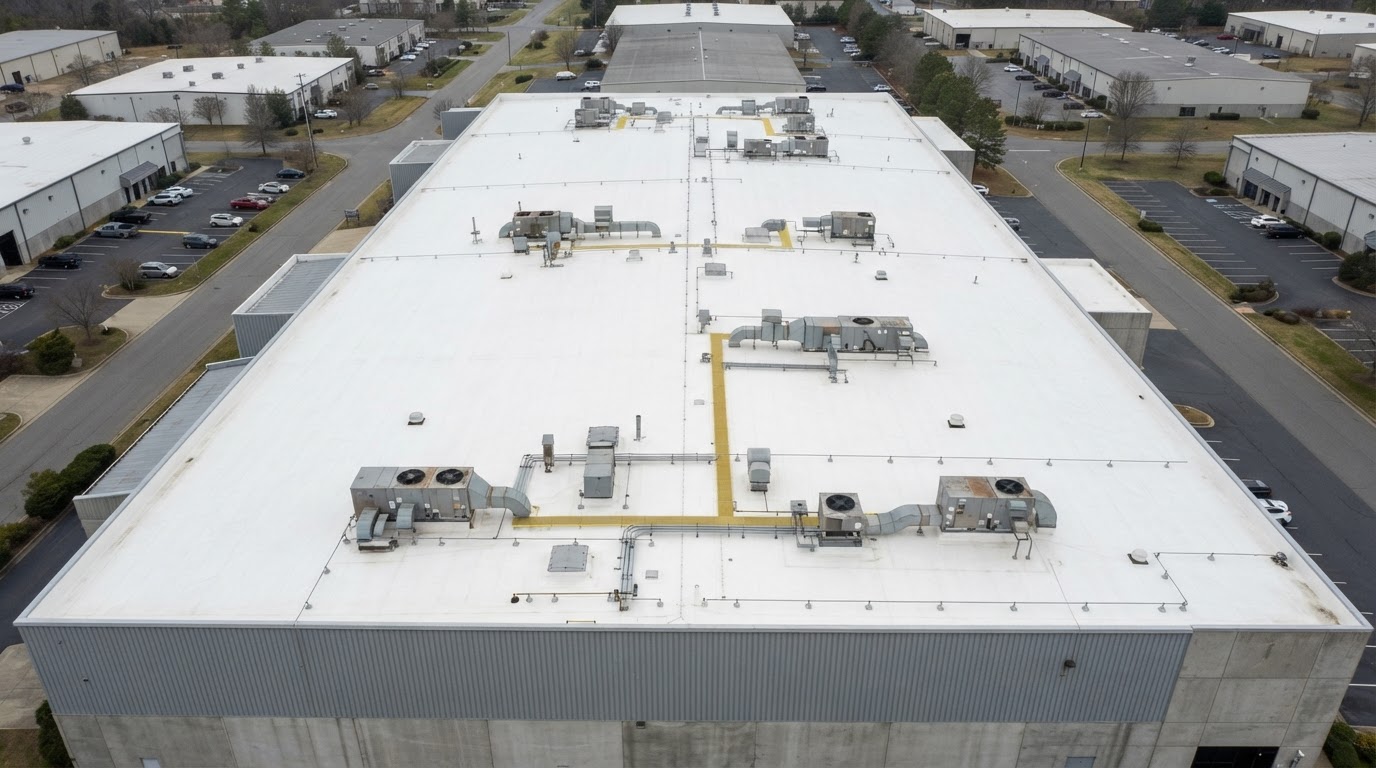
TPO, or thermoplastic polyolefin, is a single-ply membrane used on many commercial flat and low-slope roofs. It is a common choice for Fort Worth commercial properties because it combines a flexible membrane with heat-welded seams and a generally light-colored surface. But a TPO roof is a complete assembly, not just a sheet of membrane, and understanding the system helps property owners make better repair and replacement decisions.
What is a TPO roofing system?
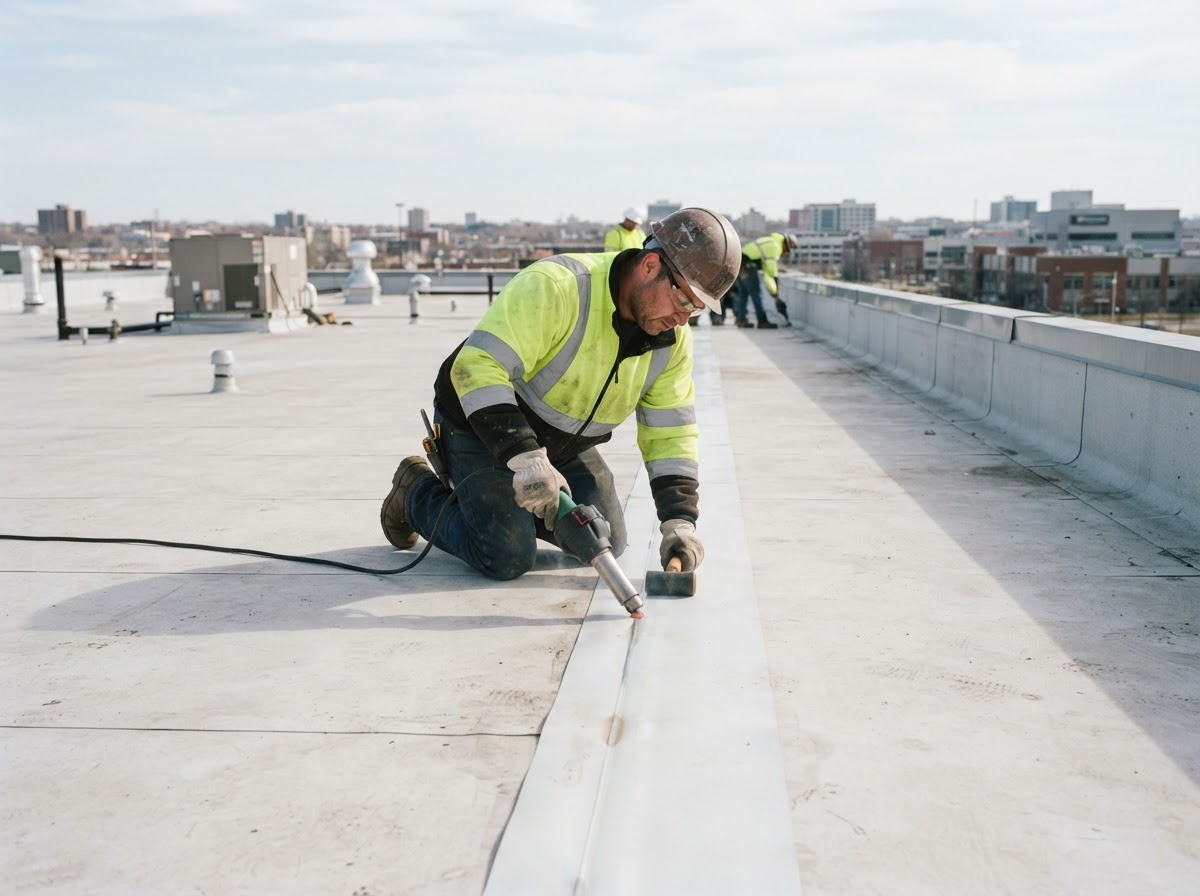
A TPO roofing system creates a continuous surface across the building. Membrane sections are connected with heat-welded seams, and details are formed around penetrations, edges, and rooftop equipment. The membrane is only one part of the system. The substrate, insulation, drainage, flashing, attachment method, seams, and workmanship all influence how the roof performs.
That is why a TPO roof should be evaluated as a complete assembly rather than judged by membrane appearance alone. A clean, white surface can look fine while a seam or flashing detail is failing underneath.
Why commercial properties use TPO
TPO is widely used because it combines a flexible single-ply membrane with welded seams and a generally light-colored surface. Depending on the product and assembly, a white TPO surface can reflect more sunlight than a dark roof, which may support energy-efficiency goals and help reduce heat absorbed at roof level.
Actual cooling costs depend on insulation, HVAC performance, building use, and other conditions, so savings should not be guaranteed from the membrane alone. TPO can also resist UV exposure and ordinary rooftop conditions when properly selected and installed, but it is not puncture-proof or maintenance-free.
Common visible concerns
A leak inside a commercial building does not always sit directly below the opening in the roof. Water can travel along the membrane, insulation, deck, or building components before it becomes visible. Common concerns include:
- Open or stressed seams
- Punctures, cuts, and surface damage
- Deteriorated or loose flashing
- Damage around curbs, vents, and other penetrations
- Loose edges
- Ponding water and drainage concerns
- Signs of previous repairs that may be failing
Flat roof drainage deserves attention
Flat roofs are built with enough slope to move water toward drains, scuppers, or other outlets, but debris, settling, blocked drainage, and roof conditions can still leave areas of ponding water. Standing water adds stress and can make small membrane or flashing problems harder to ignore.
A roof inspection should include visible drainage conditions, not only the area around an active leak. Keeping drainage paths clear and addressing recurring ponding can reduce avoidable strain on a commercial flat roof.
Inspection checklist for property owners
Look for ponding water after rain and note how long it remains. Check seams and flashing around penetrations and edges. Note any punctures or surface damage from traffic or debris. Keep drainage paths clear of leaves and debris. Schedule a professional inspection after severe weather or when interior moisture appears.
Repair or replacement?
Many localized punctures and seam issues can be repaired when the surrounding membrane remains in suitable condition. Replacement may make more sense when the membrane is failing across large areas, moisture has spread beneath the surface, repeated repairs no longer hold, or the existing system cannot provide dependable service.
Age matters, but age alone does not settle it. The condition of the membrane, seams, insulation, substrate, flashing, penetrations, drainage, and previous repair work should all be considered. See our TPO and flat roofing and commercial roofing pages for more detail.
How long does a TPO roof last?
The lifespan of TPO roofing varies. Product type, membrane thickness, roof design, installation quality, UV exposure, drainage, foot traffic, storms, maintenance, and damage all matter. No contractor should promise a universal lifespan without considering the system and property.
Regular inspections can identify punctures, seam concerns, drainage problems, and flashing issues before they become larger repairs. Schedule a commercial roof inspection after severe weather or when you notice interior moisture or a change in roof condition.
Storm damage and insurance
Hail, wind, debris, and rooftop traffic after a storm can damage a TPO membrane or its details. Advanced Roofing can inspect and document visible damage, explain the work that may be needed, and coordinate approved repairs or replacement. Your insurance carrier determines coverage and claim approval.
Whether you are dealing with a leak, puncture, open seam, drainage concern, storm damage, or an aging membrane, start by finding out what the roof actually needs. Call 817-602-7070 or request a free TPO roof inspection.