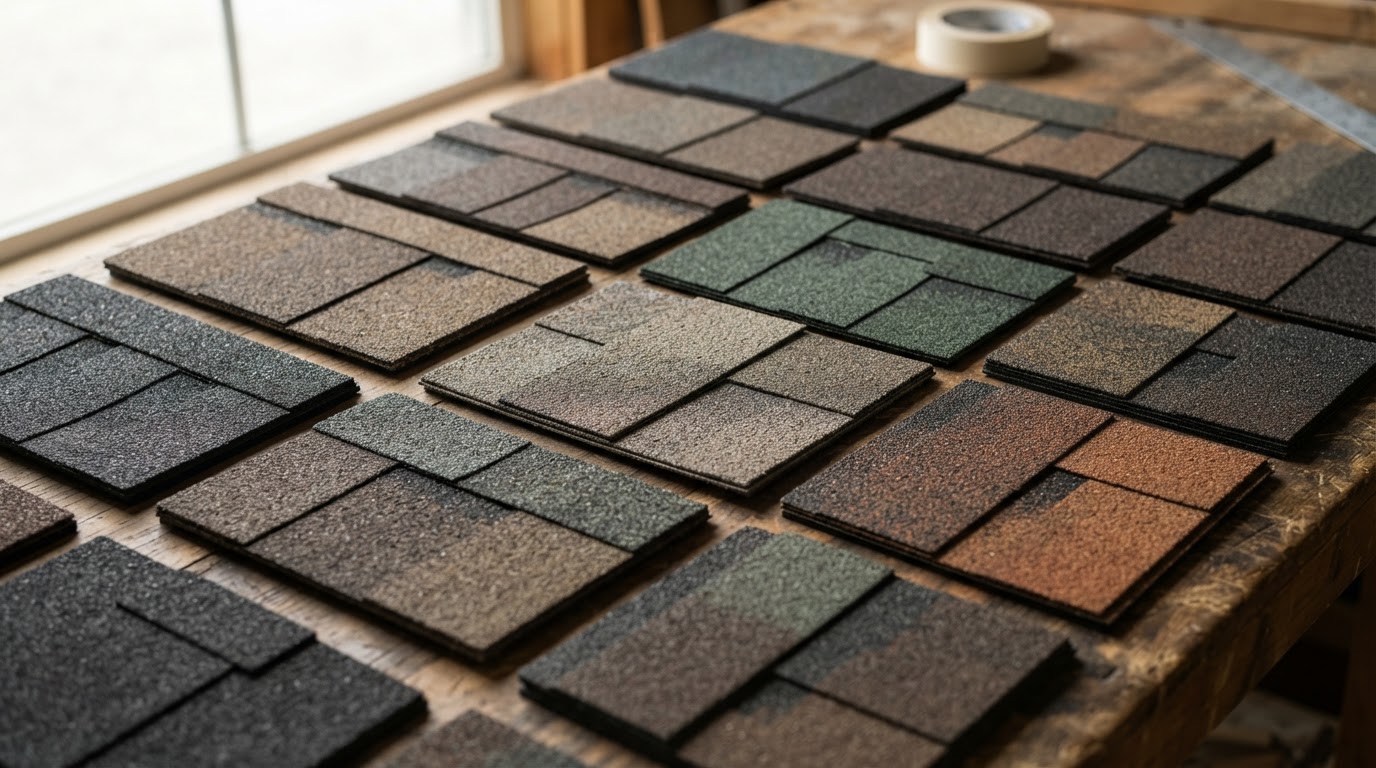

A roof rarely fails all at once. In North Texas, heat, sudden temperature swings, wind, and hail wear a roof down over years, and the first warnings are usually visible long before water reaches the ceiling. The challenge is knowing which signs matter and which ones can wait. You should not have to climb onto the roof to spot most of them. Here are seven signs Fort Worth homeowners can check from the ground or the attic, plus when each one deserves a professional inspection.
Safety first
Never climb onto a wet, steep, or visibly damaged roof. Most of the signs below can be seen from the ground, through a window, or from inside the attic. When in doubt, arrange a professional inspection.
1. Missing, lifted, or curled shingles
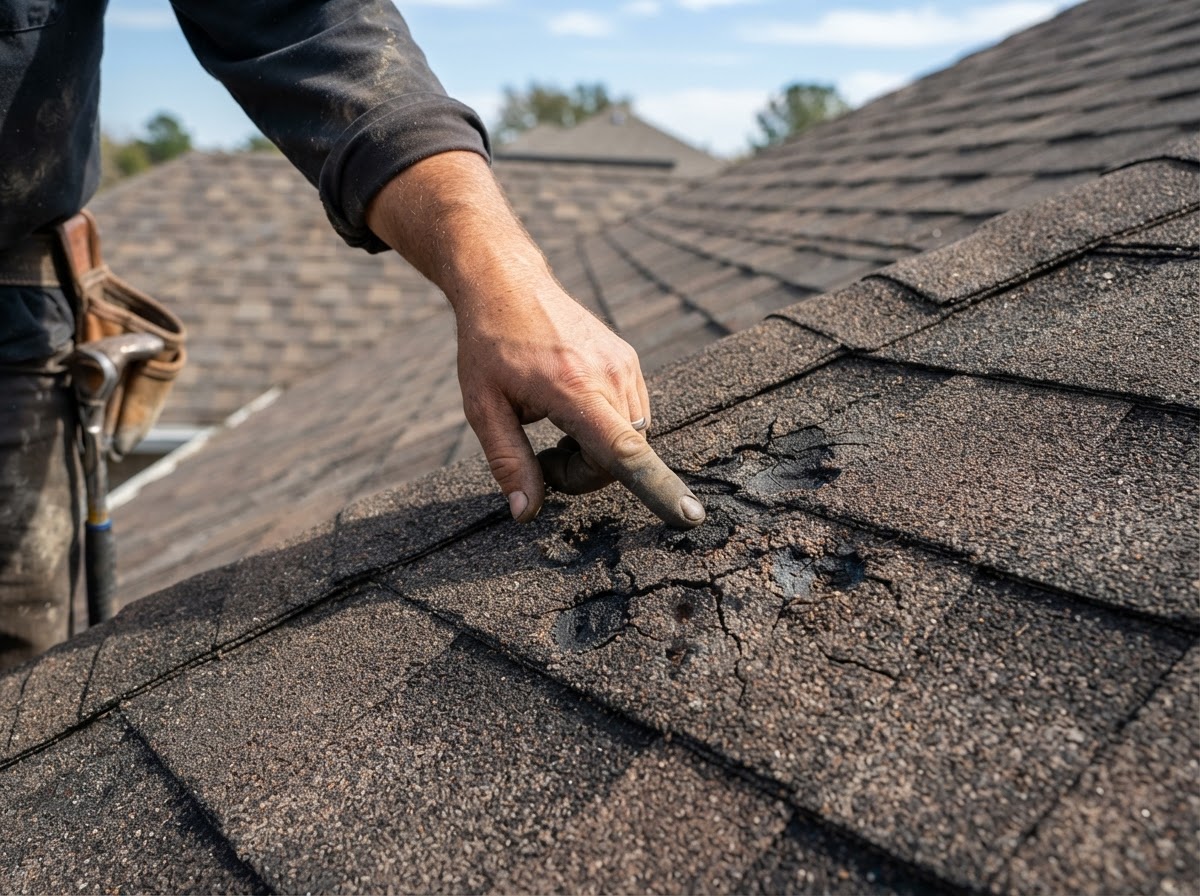
Shingles are the most visible part of the roof, so they are also the easiest to check. Look for gaps where a shingle used to be, edges that lift away from the roof, or tabs that have curled upward. Wind can lift a shingle and set it back down, leaving a weakened seal even when it still looks attached.A few missing shingles after a storm may be a localized problem that a roof repair can address. Shingles curling or lifting across many areas often point to aging or ventilation trouble that deserves a closer look.
2. Granules collecting in gutters or near downspouts
Composition shingles are coated with granules that protect the asphalt from the sun. As a roof ages, or after hail, those granules shed and wash into the gutters. A small amount is normal, especially on a new roof, but a heavy buildup of gritty, sand-like material in the gutters or at the base of downspouts is worth noting.
Granule loss exposes the asphalt underneath to UV, which shortens the life of the shingle. It is also one of the more common signs of hail impact, which can bruise shingles without tearing them.
3. Water stains on ceilings or walls
A brown or yellow ring on the ceiling is hard to miss, but the stain is rarely directly below the opening in the roof. Water can travel along decking, framing, and flashing before it drips indoors, so the visible mark may sit several feet from the actual entry point.
A fresh stain, especially after a storm, is a good reason to schedule an inspection. Even a slow leak can reach insulation, drywall, and wood framing if it is left alone.
4. Flashing that looks loose or gapped
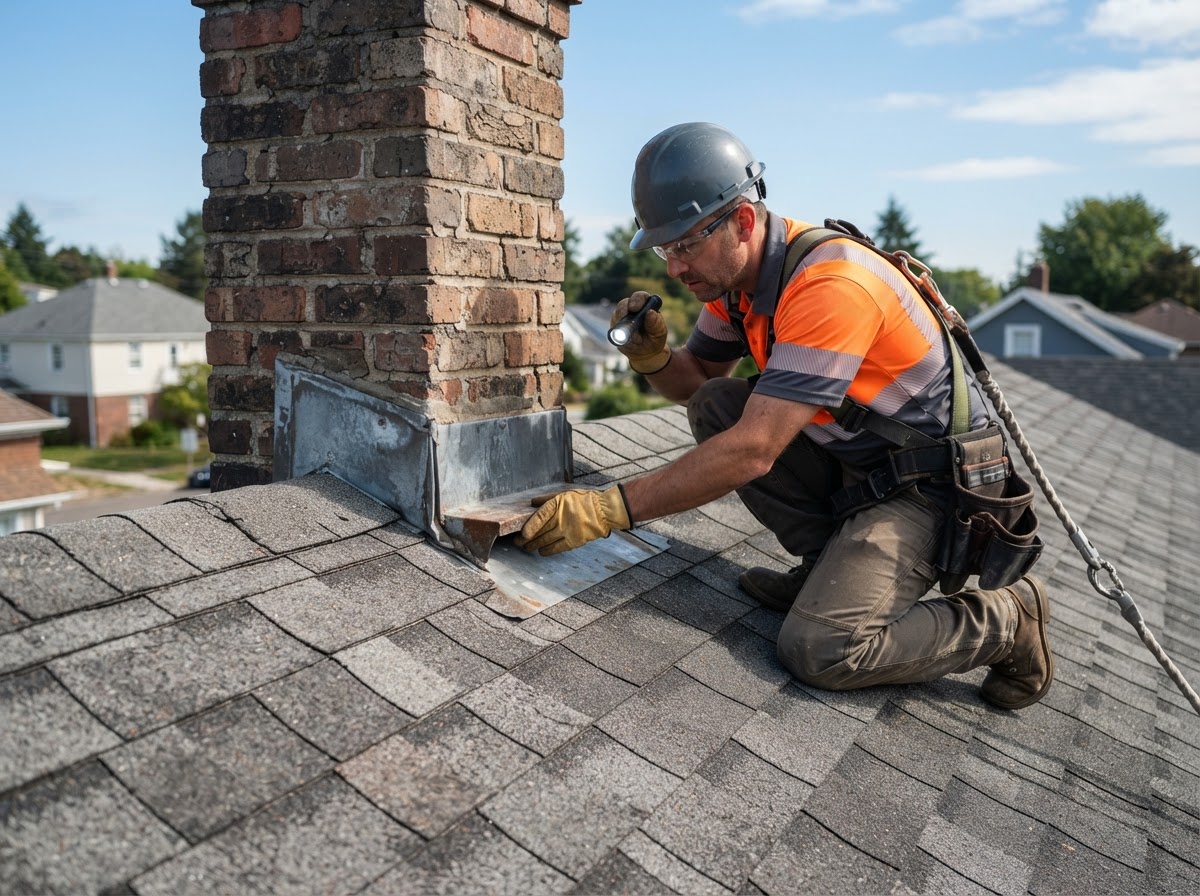
Flashing is the thin metal installed around chimneys, vents, skylights, and wall transitions. It is also one of the most common leak sources, because it can loosen, lift, or pull away from the surface over time.
From the ground, look for metal that appears lifted, rusted, or separated from the surface it protects. Flashing problems can develop even when the surrounding shingles still look good, which is why a professional roof inspection considers the whole system, not just the shingles.
5. Daylight showing through the attic
If you can safely access the attic during the day, turn off any lights and look up. Small pinpoints of daylight between boards are not unusual, but larger gaps, especially around pipes, vents, or the chimney, can be an entry point for both water and pests.
While you are there, look for damp insulation, dark staining on the underside of the decking, or a musty smell. Any of those can mean moisture has been moving through the roof system.
6. Sagging or soft spots in the roofline
A roof should sit flat along its ridges and valleys. A dip, wave, or visible sag in the roofline can point to decking or framing that has been weakened by long-term moisture. This is not something to monitor for months. A sagging roof warrants a prompt professional evaluation.
7. An aging roof with recurring problems
There is no universal lifespan for a roof. Material, installation, ventilation, sun exposure, hail, wind, drainage, and maintenance all play a role. But if a roof is approaching the end of its expected service life and leaks keep returning in different areas, repeated patches may no longer be the responsible choice.
When damage is widespread or the system is simply worn out, roof replacement may make more sense than another repair. A free inspection gives you a property-specific starting point instead of a guess.
What to do next
- Check from the ground. Walk around the home and look for missing shingles, lifted flashing, and debris.
- Look inside. Check ceilings, walls, and the attic for stains, daylight, or damp insulation.
- Document what you see. Ground-level and interior photos help a contractor understand the situation before the visit.
- Schedule an inspection. A professional can confirm what is visible and explain what cannot be seen without closer access.
Advanced Roofing has served Fort Worth and surrounding North Texas communities since 2006. We inspect accessible, visible conditions, explain what we find, and recommend repair or replacement based on the roof, not a sales target. Call 817-602-7070 or request a free roof inspection to get a straight answer about your roof.